Our Algebra 2 online course is designed for students who…
View
This website doesn’t use many cookies but there are a few. Learn more. By clicking “Accept” you agree to the temporary storing of cookies on your device.
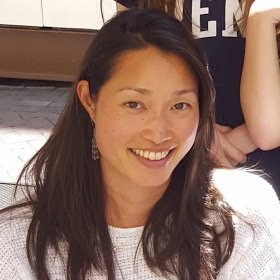
Julie Elencweig is a seasoned educator who has spent more than a decade teaching mathematics and computer science in some of New York City’s most respected independent schools. Over the years, she has guided students through everything from Geometry and Algebra I & II to Precalculus, Calculus, and AP Computer Science. For the past four years, she has continued her work internationally at EMIS in Israel, an IB school, where she teaches both math and computer science. Julie approaches her work with clarity and purpose: she believes students learn best when they understand not just how to solve a problem, but why it works—and when they feel genuinely known by their teacher.
At the center of my teaching is a simple conviction: each student deserves to be known, challenged, and taken seriously. Real learning happens in relationship. When a student feels understood—when their strengths, questions, hesitations, and ambitions are seen clearly—they are far more willing to take intellectual risks. I design my classes to be places where curiosity is welcomed, effort is respected, and growth is expected.
I care deeply about building intrinsic motivation. Of course grades and exams matter, but what matters more to me is that a student begins to ask their own questions. Why does this theorem work? How does this algorithm shape the world around us? What happens if we approach this problem from another angle? I want students to move beyond memorizing steps and toward understanding ideas. Whether we are working through a complex calculus proof or designing a small computer science project, my goal is for students to see themselves as thinkers—capable, logical, and creative.
Because I often work one-to-one, I have the privilege of truly customizing the learning experience. I pay close attention to pace, gaps in understanding, and sparks of interest. If a student is fascinated by game design, we might explore programming concepts through that lens. If another thrives on structure, we build a clear roadmap with measurable goals. I believe high standards are a form of respect, and I hold students to them—but always with warmth and steady support. Struggle is part of the process, and I help students develop the resilience and problem-solving habits that allow them to move through it with confidence.
Above all, I aim to create an environment where students feel safe to think out loud, to be wrong, and to try again. There is a great deal at stake in a young person’s education, and I don’t take that lightly. My hope is that long after a course ends, my students carry with them not only stronger skills in math or computer science, but also a deeper trust in their own ability to reason, persist, and learn.

“I aim to create an environment where students feel safe to think out loud, to be wrong, and to try again.”
